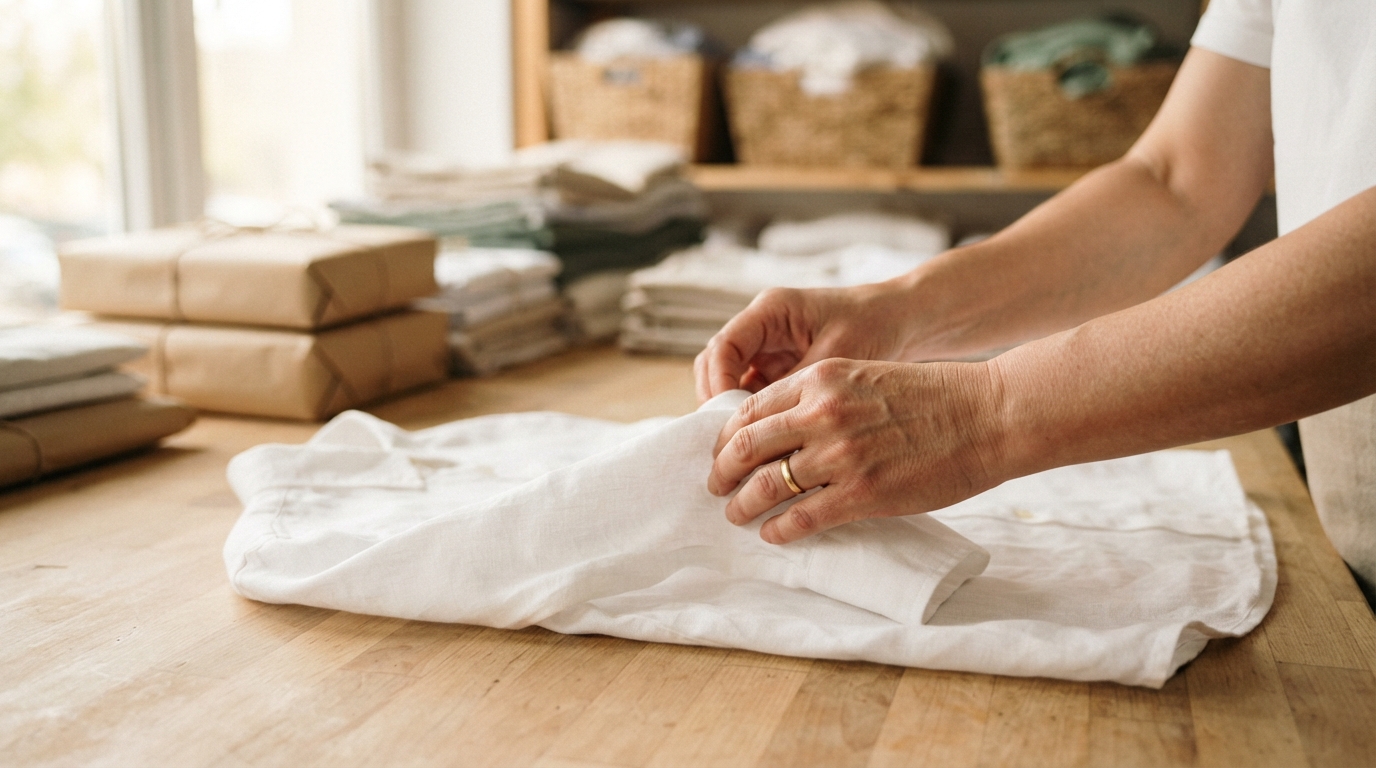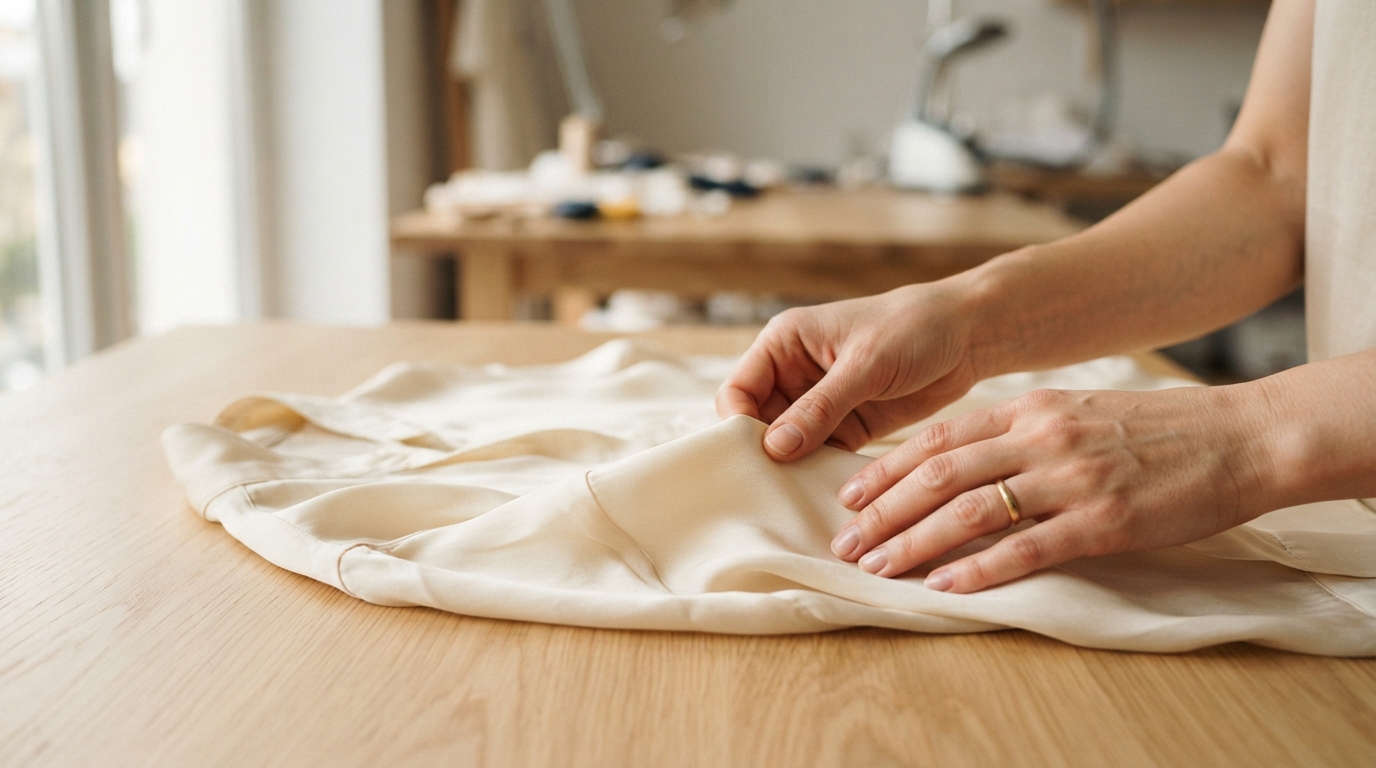
This kind of laundry depends less on high volume and more on consistency in how each item is handled. Customers usually arrive with a clear problem: dress shirts, dresses, wool pieces, silk, leather, or items with sensitive finishes that require a defined process and precise communication.
Deciding to open this business means paying attention to the types of items you will accept, the level of specialization in your team, and how well your operation can separate, identify, and treat each piece without mistakes. In this case, poor service explanations or an incomplete intake form can cost more than a bad wash.
- delicate items
- technical process
- detailed service
- item-by-item control
What you need to understand before moving forward
Which items will you accept
You need to define precisely what comes in and what stays out. Delicate garments are not a single group: silk, wool, tailoring, dresses with appliqués, leather, and lined pieces all require different treatments, and accepting everything without criteria raises the risk of damage and rework.
Do you understand the washing and finishing processes
Before opening, it is worth checking whether you can describe the process for each type of item, from sorting to delivery. If the operation does not have a clear routine for pre-inspection, testing in discreet areas, batch separation, and finishing, the business turns into a sequence of improvisations.
How will you record the condition of each item
You need to decide how you will document stains, wear, pre-existing damage, and customer instructions. This protects the operation, improves communication, and avoids disputes after delivery, especially when the item already arrives with signs of use or fragility.
What will be the turnaround standard for each service type
Delicate garments do not always fit into a fast workflow. You need to separate urgent services, services with more steps, and items that require evaluation before pricing, because promising a deadline without considering the process increases the chance of mistakes.
Who will perform and review each step
This business depends on people trained to identify fabric, labels, finishing, and the risk of distortion. Even a small operation needs to know who does the sorting, who approves the treatment, and who checks the item before release.
The critical points of this business
Offer
The offer needs to be narrow and well defined. The clearer the list of items you handle, the care included, and the service limitations, the easier it is to sell with confidence and the less likely you are to take on work the operation cannot support.
Operations
The routine needs to separate intake, identification, pre-treatment, washing, drying, finishing, and inspection. In a specialty laundry, the issue is not just cleaning, but repeating the process with enough consistency to reduce variation between similar items.
People
Quality depends heavily on the right reading of the item by the person at the front desk and by the person operating the process. If the team does not understand labels, fabrics, and signs of fragility, the specialization exists only in name.
Financials
The business needs to be modeled by item type, execution time, and rework rate, not just total volume. You should understand how much each cycle costs, how long the item stays in the operation, and what margin remains after losses, supplies, and labor.
Location
The location needs to make drop-off and pickup easy for customers who value convenience and trust. In many cases, the site works better when it is close to areas with recurring demand for business attire, events, household services, or higher-end retail.
Regulation
You need to check local requirements for operations, waste disposal, chemical use, and workplace safety. Because the service deals with sensitive fabrics and specific supplies, any lapse in storage, ventilation, or handling can become an operational and legal problem.
What can compromise the business
Accepting items beyond your technical capacity
The most expensive mistake is taking in items the operation does not know how to handle safely. This increases the risk of damage, raises the chance of refunds, and weakens your reputation right from the start. Prevention begins with a clear acceptance and refusal policy.
Promising uniform treatment for different fabrics
If you treat every delicate item as if it were the same, the chance of distortion, shrinkage, or loss of finish goes up. Customers notice when the service is generic, because they chose a specialty laundry precisely to avoid that kind of failure.
No intake record
Without recording stains, damage, and customer notes, responsibility becomes a gray area. In a specialty laundry, this is not bureaucracy; it is part of protecting the operation and the customer relationship.
A team without a final inspection routine
When an item leaves without a final check, the problem may only show up at delivery. That is especially bad with delicate garments, because small finishing flaws, loose buttons, or remaining marks are easy to notice.
A structure designed for volume, not care
An operation built only to move items quickly tends to sacrifice separation, control, and finishing. In this business, speed without criteria lowers service quality and limits the type of customer you can serve.
Turn these questions into decisions
Understanding which items you will serve, how each one will be handled, and what it costs to operate at a consistent standard is what separates a specialty laundry from a regular one. Vibz helps you organize these decisions before you buy equipment, hire a team, or commit to a location.
Business Scope
Here you turn the idea into a testable business thesis: which items are included, what problem you solve, who the service makes sense for, and which assumptions need to be tested before investing.
Market Intelligence
This stage helps you structure the analysis of demand, customer profile, and local competition, so you can decide whether your specialization has room to grow and how to position the service without relying on guesses.
Operational Plan
Use this stage to design the real service flow, from sorting to delivery, including processes, structure, team, and suppliers. It is where you validate whether the operation can sustain the standard delicate garments require.
Financial Modeling
Here you turn the earlier decisions into numbers, with investment, costs, expenses, working capital, and scenarios. That shows whether the model still works once you account for rework, processing time, and the structure you need.
Before investing, you should know
- Which types of items will you refuse at intake?
- How will you record damage and notes at reception?
- What process will each delicate fabric follow inside the operation?
- How many items per day can your team handle without losing consistency?
- Which part of the service requires manual inspection before washing?
- How much time does each stage take by item type?
- What drying, finishing, and storage setup do you need to build?
Sua ideia merece mais do que um palpite. Estruture o negócio, teste suas premissas e entenda se ele faz sentido antes de comprometer tempo e dinheiro.
Planejar meu negócio no Vibz