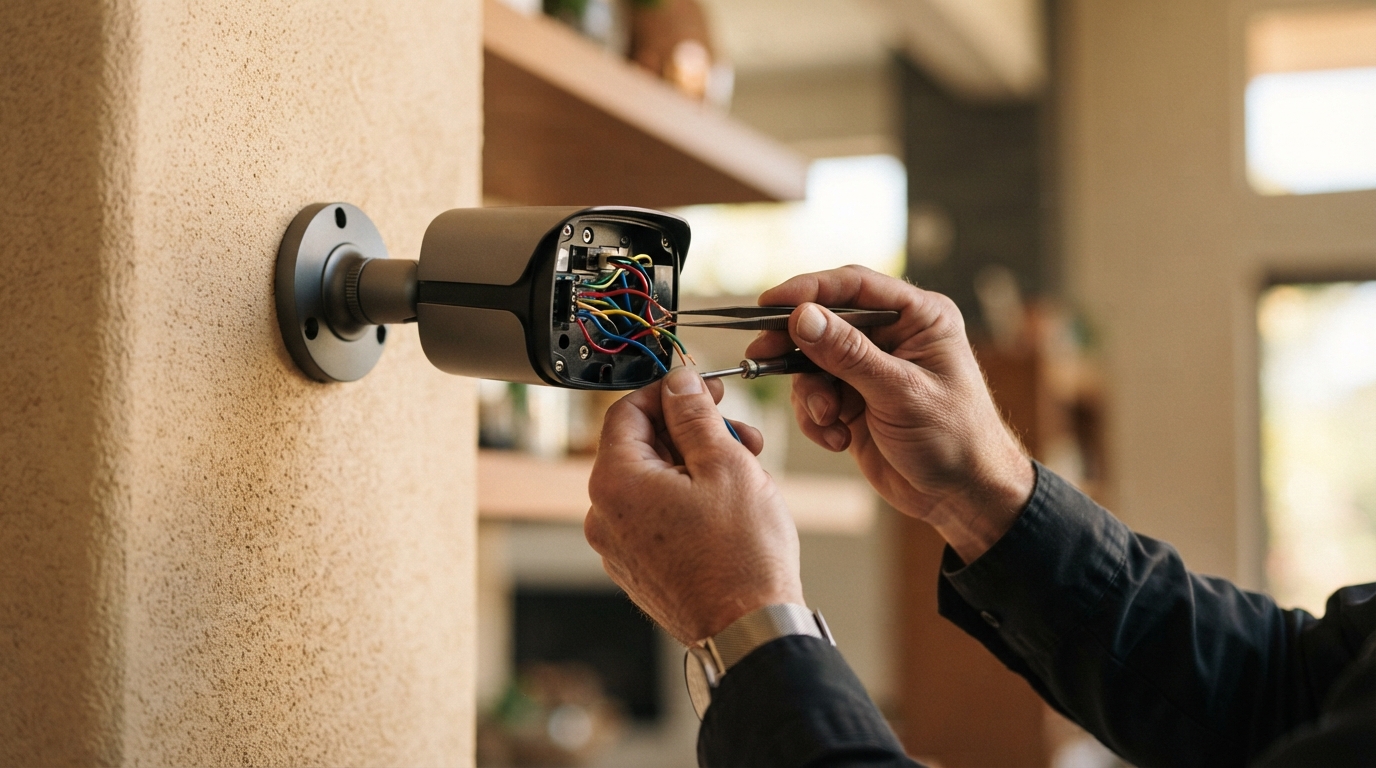
You are entering a technical service business with consultative selling. In many contracts, the client is not just buying a camera. They are buying the confidence that the system will work, record properly, and be accessible when needed.
That changes the way you plan. The result is not defined only by doing a good installation, but by knowing which types of clients you want to serve, which equipment you will standardize, how you will price the visit and the project, and how you will handle support after delivery.
- technical service
- consultative selling
- installation and support
- equipment and design
What you need to understand before moving forward
Will you sell installation, design, or maintenance?
These models have different margins, routines, and needs. Standalone installation usually depends more on volume and speed; design and maintenance require more diagnosis, documentation, and recurring relationships.
Who is the client you want to serve?
Homes, small businesses, condos, offices, and industrial operations require different levels of design, lead time, support, and responsibility. If you do not define this upfront, you will buy the wrong equipment, promise more than you can deliver, and create disorder in your operation.
Will you standardize brands and models?
Standardization reduces errors, idle inventory, and installation time. It also makes support and replacement easier, but it limits commercial flexibility; that is why you need to decide where a standard makes sense and where exceptions are worth it.
Who handles the electrical and infrastructure work?
Many installations require cable routing, mounting, power supply, and network adjustments. You need to define whether you handle everything in-house, outsource part of the service, or work only with sites that are already prepared.
How will you charge for each stage?
Separating the technical visit, design, installation, materials, and support avoids underpricing the work. In this business, charging everything as a single package often hides travel time, rework, and after-sales support.
The critical points of this business
Market
You need to understand which situations create real demand: renovations, higher perceived risk, control requirements, site expansion, or the need for remote monitoring. Clients rarely buy cameras out of curiosity; they buy when there is a practical and clear reason.
Offer
Your offer needs to make clear what is included, what depends on existing infrastructure, and what will be charged separately. If the proposal mixes equipment, installation, setup, and support without separating responsibilities, margin becomes hard to control.
Operations
Operations depend on scheduling, travel, tools, testing, and installation standards. You need to know how many jobs you can handle per day without compromising quality, because every return visit due to a technical failure consumes time and reputation.
Financials
The business needs to be modeled by service type, not just by total revenue. You should map equipment acquisition cost, shipping, consumables, technical hours, warranty, travel, and average payment terms to understand whether cash flow keeps up with execution.
Location
Location matters less because of the storefront and more because of the service area. If you work with frequent travel, you need to measure your operating radius, transit time, and customer concentration to avoid a business that sells well but spends the day on the road.
People
Camera installation requires a technician with attention to finish quality, blueprint reading, cable organization, and clear communication with the client. An installer who knows how to execute but cannot explain limitations and technical trade-offs creates conflict and rework.
What can compromise the business
Selling without mapping the client’s infrastructure
Many proposals fail because the site does not have proper cable routing, enough power, a network point, or a workable mounting position. Before closing, you need to confirm the existing infrastructure and what will need to be adapted.
Mixing simple installation with a more complex project
Treating all services as if they were the same distorts timeline and margin. A small residential installation does not require the same analysis as a system with multiple points, remote recording, and network integration.
Buying equipment before validating the sales standard
Idle inventory in a technical business ties up capital and increases obsolescence risk. The safest path is to first define the client type, the package you offer, and the models that actually move in your operation.
Underestimating support after delivery
This business does not end with installation. Access adjustments, password changes, app setup, and usage questions can take up significant time if they are not included in the contract or priced in.
Depending on each quote as if it were unique
When every proposal is built from scratch, the process becomes slow and error-prone. Without a minimum structure of packages, visit criteria, and optional items, you waste commercial time and make it harder to compare jobs.
Turn these questions into decisions
In this kind of business, planning well avoids two common losses: buying the wrong equipment and promising more than the client’s setup can support. Vibz organizes this analysis so you can turn operational and financial doubts into a clear plan before investing.
Business Scope
It helps define whether your company will focus on standalone installation, design, maintenance, or a mix of these services, while also organizing the target audience, the offer, and the assumptions that need validation.
Market Intelligence
It helps structure your reading of the market, customer profile, and the contexts in which the purchase happens, so you do not build an offer without understanding who actually decides to hire you.
Operational Plan
It helps you design the practical execution, from product and process choices to team, suppliers, and channels, which is decisive when installation depends on technical standards and travel.
Financial Modeling
It turns your decisions into numbers for investment, cost, working capital, and cash flow, so you can see whether the model works before buying equipment and taking on commitments.
Before investing, you should know
- How many client types can you serve with the same equipment and installation standard?
- Which services are included in the price and which will be charged separately?
- How long do you usually spend between the visit, installation, setup, and testing?
- Which parts of the job depend on infrastructure already being in place at the site?
- What will your service radius be, and how much time will it consume each day?
- What minimum inventory makes sense without slowing down operations or locking up capital?
Sua ideia merece mais do que um palpite. Estruture o negócio, teste suas premissas e entenda se ele faz sentido antes de comprometer tempo e dinheiro.
Planejar meu negócio no Vibz