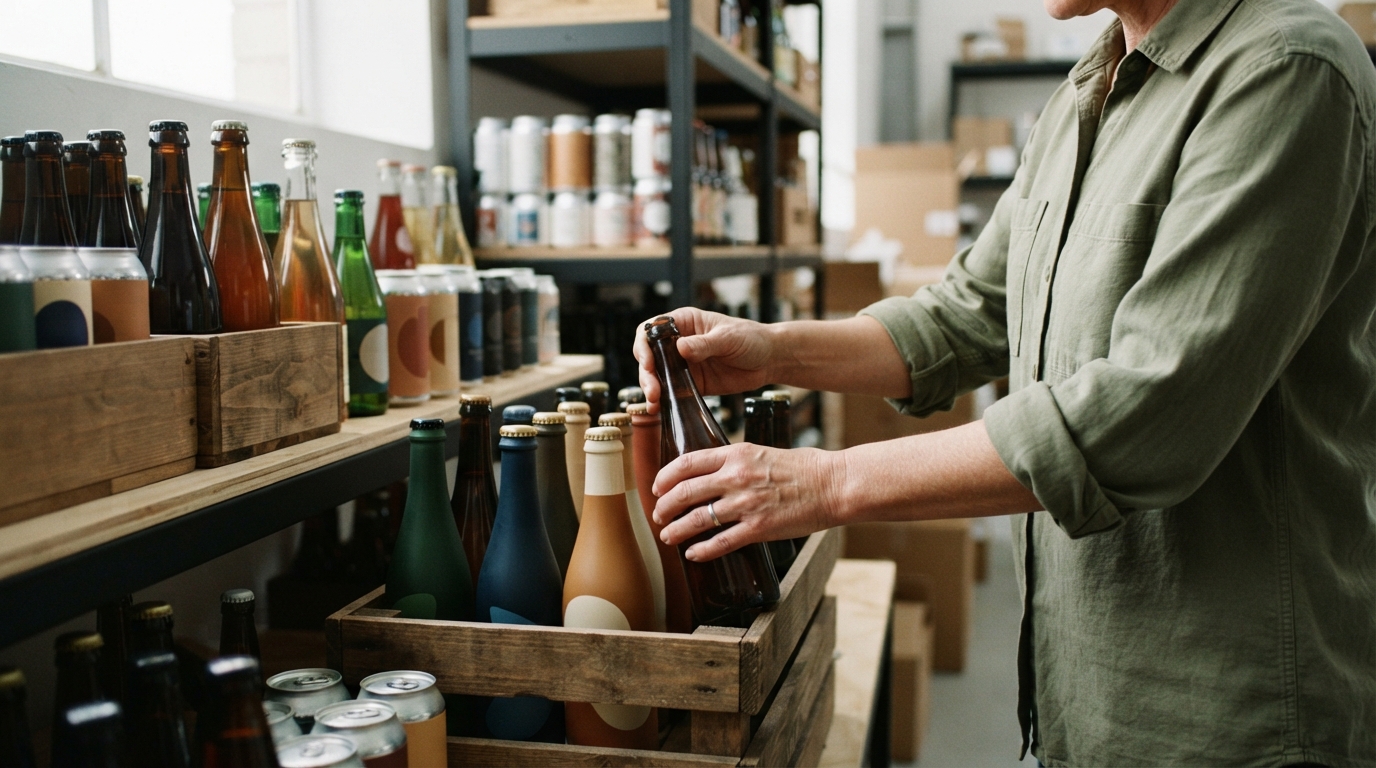
A beverage distributor runs on volume, repeat purchases, and availability. You are not just selling products; you are selling quick restocking, enough variety, and reliable delivery to bars, neighborhood stores, events, and end consumers, if that is your model.
That changes the analysis from the start. What looks like a decision about location, product mix, or inventory is, in practice, a decision about turnover, locked capital, and the ability to fulfill orders without running out of goods.
- inventory turnover
- repeat purchases
- fast delivery
- broad mix
What you need to understand before moving forward
Who buys repeatedly?
You need to know which customers buy every week, in what volume, and why they come back. In distribution, isolated sales do not sustain the operation; what pays the bills is repetition with predictable orders.
Does your model serve retail, bars, or events?
Each audience changes ticket size, urgency, margin, and delivery requirements. Mixing everything without a clear criterion usually leads to the wrong inventory and poor service for the customers who actually buy more.
Which items drive turnover?
You need to identify which beverages sell most often and which stay on the shelf longer. That defines the capital tied up in inventory and keeps you from buying too much variety before you understand real demand.
Will you deliver, or will the customer pick up?
That decision changes cost, staffing, routes, packaging, and service time. In-house delivery expands reach, but it requires operational discipline; pickup reduces complexity, but limits the type of customer you can serve.
Are there restrictions on selling certain products through your channel?
Some customers only buy specific items, in specific packaging, or under very clear commercial terms. If you do not confirm that beforehand, you end up building inventory that does not match the demand around you.
The critical points of this business
Market
You need to map who buys beverages in the area, how often, and under what delivery conditions. In distribution, the market is not just about size; it is the combination of customer profile, restocking habits, and nearby competition.
Offer
The mix has to fit the audience you want to serve. Fast-moving beverages support turnover, but the offer also needs complementary categories that make sense for the same buyer, without inflating inventory.
Operations
The operation depends on receiving, storing, picking, and shipping without mistakes. If the checking routine is weak, you lose margin through damage, exchanges, expired products, and wrong orders.
Financials
This is a business with sensitive working capital needs. You need to project how much you buy before you sell, how long it takes for the money to come back, and how much inventory your cash flow can handle without freezing the operation.
Location
The address needs to make it easy to receive and send goods, for suppliers to access, and, if there is pickup, for customers to get in and out. In distribution, a bad location can raise operating costs even when the rent looks attractive.
Regulation
You need to check the requirements for commercial activity, tax invoicing, storage, and the sale of the products you plan to handle. Beverages have their own operating and documentation rules, and that needs to be settled before the first purchase.
What can compromise the business
Buying too much variety before knowing demand. That ties up cash in low-turnover items and increases the chance of dead stock, forced discounts, and margin loss.
Setting prices without looking at total replacement cost. Freight, losses, taxes, and payment terms change the real result of each sale, and ignoring that makes revenue look better than it is.
Treating delivery as improvisation. If orders go out wrong or late too often, the customer switches suppliers quickly, because beverages are usually bought repeatedly and leave little room for failure.
Choosing a location without thinking about logistics. An address that is difficult for loading, unloading, and vehicle access may seem like a detail at first, but it makes the whole operation more expensive and slows service.
Not separating fast-moving stock from test stock. When everything is bought at the same pace, you lose visibility into what really turns over and make decisions in the dark.
Turn these questions into decisions
In a beverage distribution business, getting the mix, turnover, or logistics wrong drains cash fast. That is why understanding the market and turning it into a plan is what separates an organized operation from an expensive stockroom that is hard to sustain.
Market Intelligence
It helps you organize who buys, how often, through which channel, and with what delivery standard. That gives you a basis to decide whether the operation makes sense for retail, bars, events, or pickup.
Operational Plan
It helps you design receiving, storage, picking, shipping, and delivery before you invest in structure. This is where you validate whether the routine can handle the volume and order type you want to serve.
Financial Modeling
It turns inventory turnover, payment terms, and delivery cost into cash flow and capital needs. For a distributor, this step shows how much money stays tied up before it comes back.
Business Scope
It helps define the exact distributor model, the priority audience, and the business bets that matter most. That keeps you from starting with a proposition that is too broad for the structure you have.
Before investing, you should know
- Which customers have you already identified that would buy repeatedly?
- What is the minimum initial mix needed to serve the audience you want to prioritize?
- How much starting inventory do you need to avoid running out of the fastest-moving items?
- What average payment term will you offer, and what average payment term will you have with suppliers?
- How much does it cost, per order, to pick, load, and deliver or make available for pickup?
- Does the chosen location make loading, unloading, and vehicle access easy for the vehicles you will use?
Sua ideia merece mais do que um palpite. Estruture o negócio, teste suas premissas e entenda se ele faz sentido antes de comprometer tempo e dinheiro.
Planejar meu negócio no Vibz