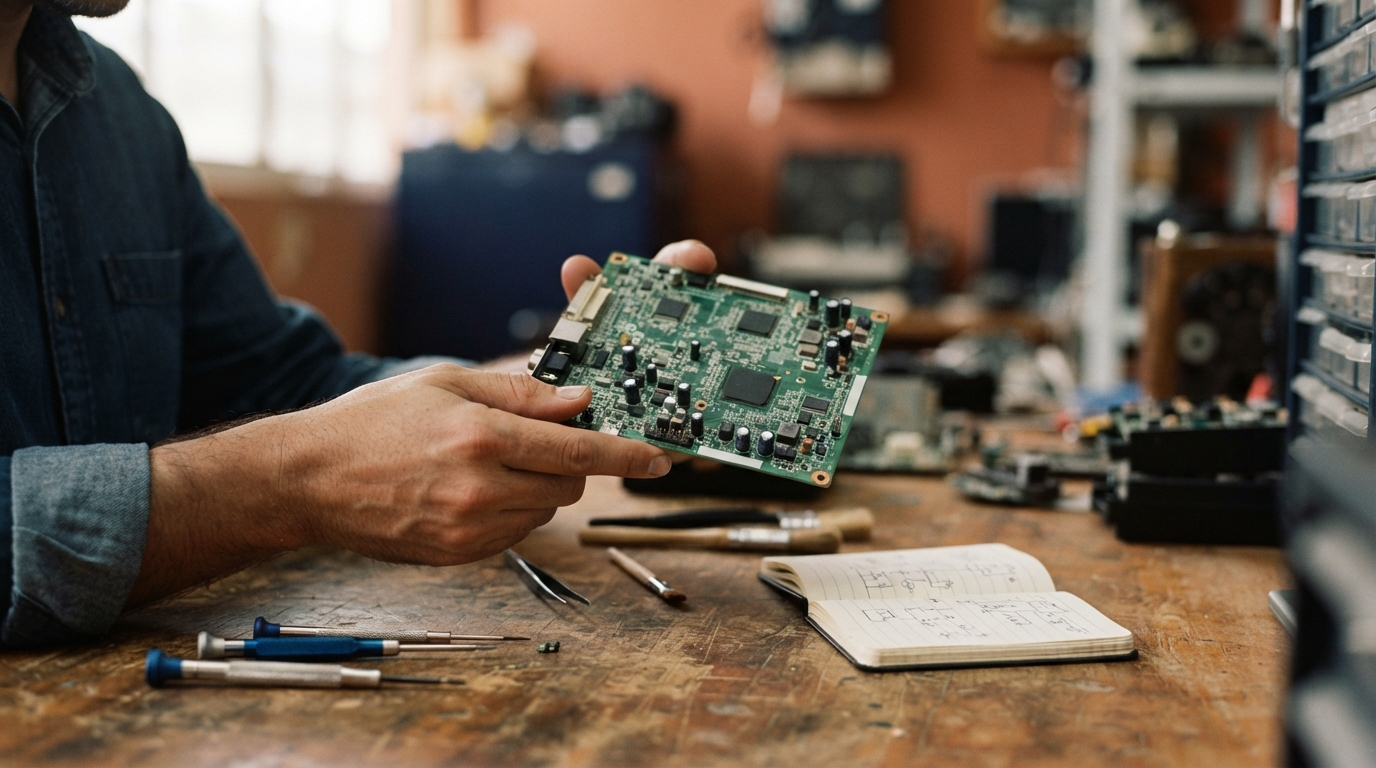
A home appliance repair business works differently from a regular store. You are selling diagnosis, repair, and trust, and each appliance brings its own mix of failure, parts, turnaround time, and risk of a comeback.
Before opening, you need to decide whether you will work from a workshop, do on-site visits, or both. That choice changes your setup, team, tools, travel, and the kind of customer it makes sense to serve.
- on-demand repair
- replacement parts
- in-home service
- technical diagnosis
What you need to understand before moving forward
Which appliances will you service
It does not make sense to start by trying to cover everything. Refrigerators, washing machines, microwaves, electric ovens, and window or split air conditioners each require different routines, parts, and tools, so you need to define which lines you can handle safely and quickly.
Will you work in the workshop, on-site, or both
In-home service adds convenience and expands your reach, but it requires travel, scheduling, and parts organization. A workshop reduces some variables, but it depends on the customer being able to bring the appliance in and accept the inspection and repair timeline.
How will your parts flow work
In repair work, the job often stalls when the right part is not available. You need to know whether you will keep minimum stock, buy on demand, or rely on suppliers with fast delivery, because that affects turnaround, margin, and return rates.
What is your diagnosis policy
Not every appliance is worth opening. You need to decide when you charge for diagnosis, when you deduct that amount from the service, and when you decline the repair because the part cost, labor time, and risk of another failure do not add up.
Who makes the buying decision
In many cases, the customer compares repair with buying a new appliance. You need to understand that decision point, because it changes how you explain the service, how urgent the response needs to be, and how much room the customer has in the estimate.
The critical points of this business
Market
You need to map which appliances are most common in your area and which failures tend to repeat on those models. It is also worth understanding whether your audience accepts repairs on older equipment or prefers to replace it once the estimate gets higher.
Offer
Your offer needs to be clear: which brands, which appliance categories, which types of defects, and which additional services are included. The broader the promise, the higher the chance of delays, wrong part purchases, and estimates that are hard to defend.
Operations
Operations depend on intake, diagnosis, disassembly, testing, and controlled delivery. If you do not organize that flow, the appliance sits idle, the customer pushes on timing, and rework eats into the service margin.
Financial
The business needs to separate labor revenue, parts sales, and travel, because each one has a different cost structure. You also need to project how much capital gets tied up in idle parts, tools, and service work before payment comes in.
Location
If you have a workshop, the location needs to make it easy for customers to drop off appliances and access the place. If you work on-site, the service area needs to match your travel time and the density of calls that justify leaving for a visit.
People
Service quality depends on technical ability and on how you communicate with the customer. Whoever handles the job needs to explain the defect, the estimate, and the timeline clearly, because repair work runs on trust and well-managed expectations.
What can compromise the business
Taking on too many appliance types without real command of each one usually leads to inaccurate estimates, wrong parts, and customers coming back with the same failure. To avoid that, define categories and test your diagnostic ability before expanding the offer.
Buying parts only after closing the job can stretch the timeline and make the customer walk away. Check which components need minimum stock and which can stay on order without hurting delivery.
Charging too little for diagnosis or ignoring the time spent on disassembly and testing weakens the business margin. Make sure the amount charged covers technical time even when the customer decides not to go ahead with the repair.
Mixing simple repairs with very long jobs without clear queues and priorities creates a chain of delays. Pay attention to how long each appliance type occupies the bench, tools, and your focus before taking on more volume.
Treating every call the same leads to inefficient travel and poor estimates for on-site service. If you are going to work outside the workshop, you need to separate calls by area, appliance type, and real chance of closing.
Turn these questions into decisions
Knowing which appliances you will service, how you will source parts, and how you will price technical time is what separates an organized workshop from an operation that spends its days putting out fires. Vibz helps you structure those decisions before you put money into benches, stock, and marketing.
Business Scope
Here you turn the idea into a business thesis: which appliance categories you will service, which problem you solve, who you serve, and which assumptions need to be validated before opening.
Market Intelligence
Use this stage to organize your reading of local demand, customer profile, and competition by service type. It helps you decide where it makes sense to enter and which appliances deserve priority.
Operational Plan
At this stage, you map the flow from intake, diagnosis, parts sourcing, repair, testing, and delivery. That helps avoid an operation that looks broad on paper and messy in practice.
Financial Modeling
Here you take the decisions to the right numbers: initial investment, parts cost, labor, travel, working capital, and cash flow. It is the stage that shows whether the model works before you commit capital.
Before investing, you should know
- Which appliance categories will you start with?
- Will you work from a workshop, on-site, or both?
- How many calls per week do you need to support the setup?
- How much time does each type of repair take on average?
- What minimum diagnosis fee makes sense in your model?
- How much money will be tied up in parts and tools before you see a return?
- Which defects will you turn away because of technical risk or low margin?
Sua ideia merece mais do que um palpite. Estruture o negócio, teste suas premissas e entenda se ele faz sentido antes de comprometer tempo e dinheiro.
Planejar meu negócio no Vibz