A coffee shop is not just about selling coffee. You need to decide whether you will focus on quick consumption, longer stays, pastries and savory items as support, or a leaner menu, because each format changes staffing, equipment, and space needs.
The logic of the location also changes. A coffee shop usually depends on recurring foot traffic, hours that match the audience, and the ability to turn short visits into repeat purchases, which means understanding who passes by, who walks in, and why.
- quick consumption
- perishable products
- daily production
- repeat purchase
What you need to understand before moving forward
What coffee shop format makes sense?
You need to decide whether you will operate with counter service, tables, quick pickup, or dine-in. That choice defines the space required, the team, service time, and the type of ticket you can support.
Does the menu fit the operation?
The more items you add, the greater the chance of losing consistency and increasing waste. Before opening, it is worth separating what sells well, what requires complex preparation, and what only takes up inventory.
Is there an audience that matches the opening hours?
Coffee shops depend a lot on commuting routines, work breaks, and convenience purchases. You need to understand whether the area generates demand in the morning, around midday, late afternoon, or in more than one of those moments.
Can you sell to the same customer more than once?
This business improves when repeat purchase is natural. If the offer does not create a reason to come back, you become more dependent on new traffic and constant promotion.
Can the operation deliver the standard you want?
Good coffee, properly made drinks, and fresh food require routine. You need to map suppliers, preparation time, storage, and restocking to know whether the experience you promise fits the day-to-day reality.
The critical points of this business
Market
You need to understand who buys coffee in the area, when they buy, whether they are looking for convenience, longer stays, or premium products, and what nearby competitors are already serving. In a coffee shop, the difference between desire and buying habit changes the sales forecast completely.
Offer
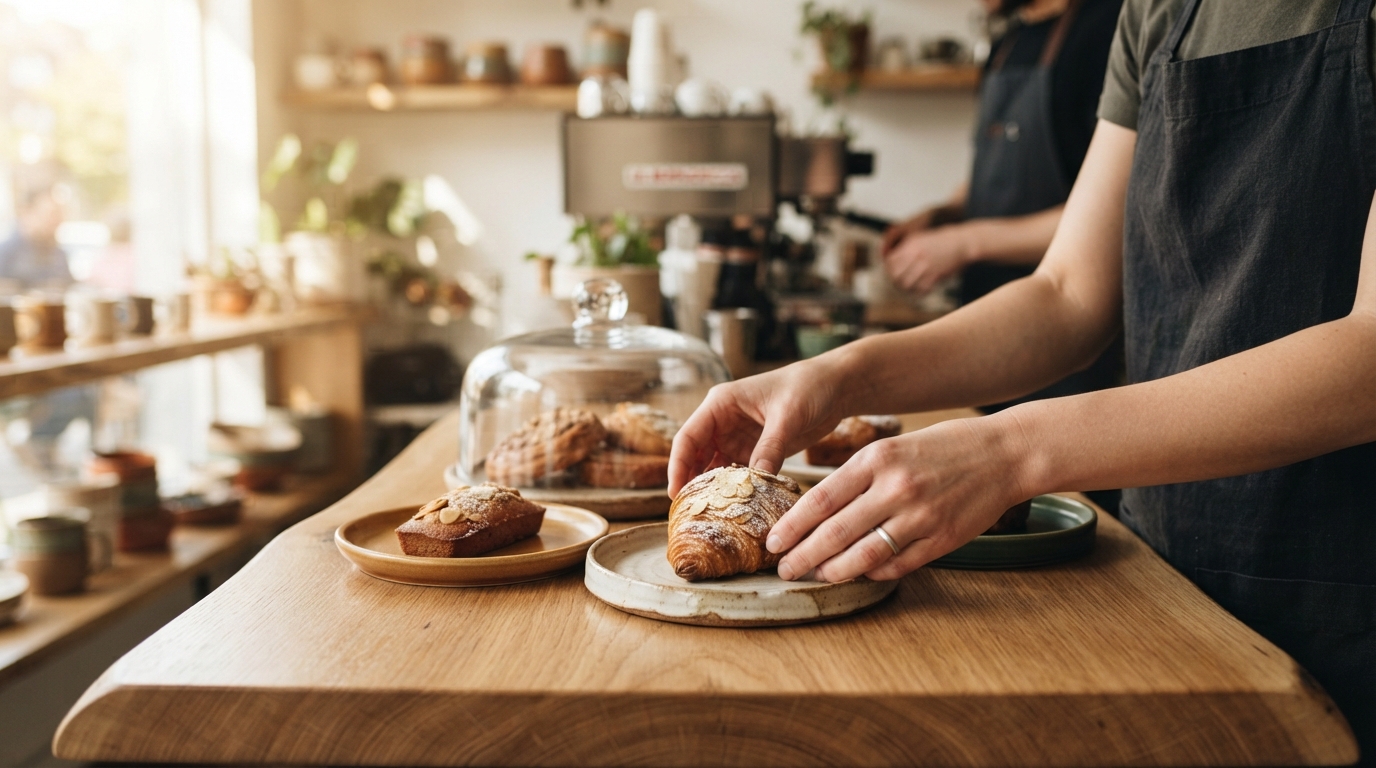
The mix needs to be coherent with the operation. Coffee, cold drinks, savory items, and sweets work better when there is a clear logic for margin, preparation, and shelf life, instead of a menu built only to look complete.
Operations
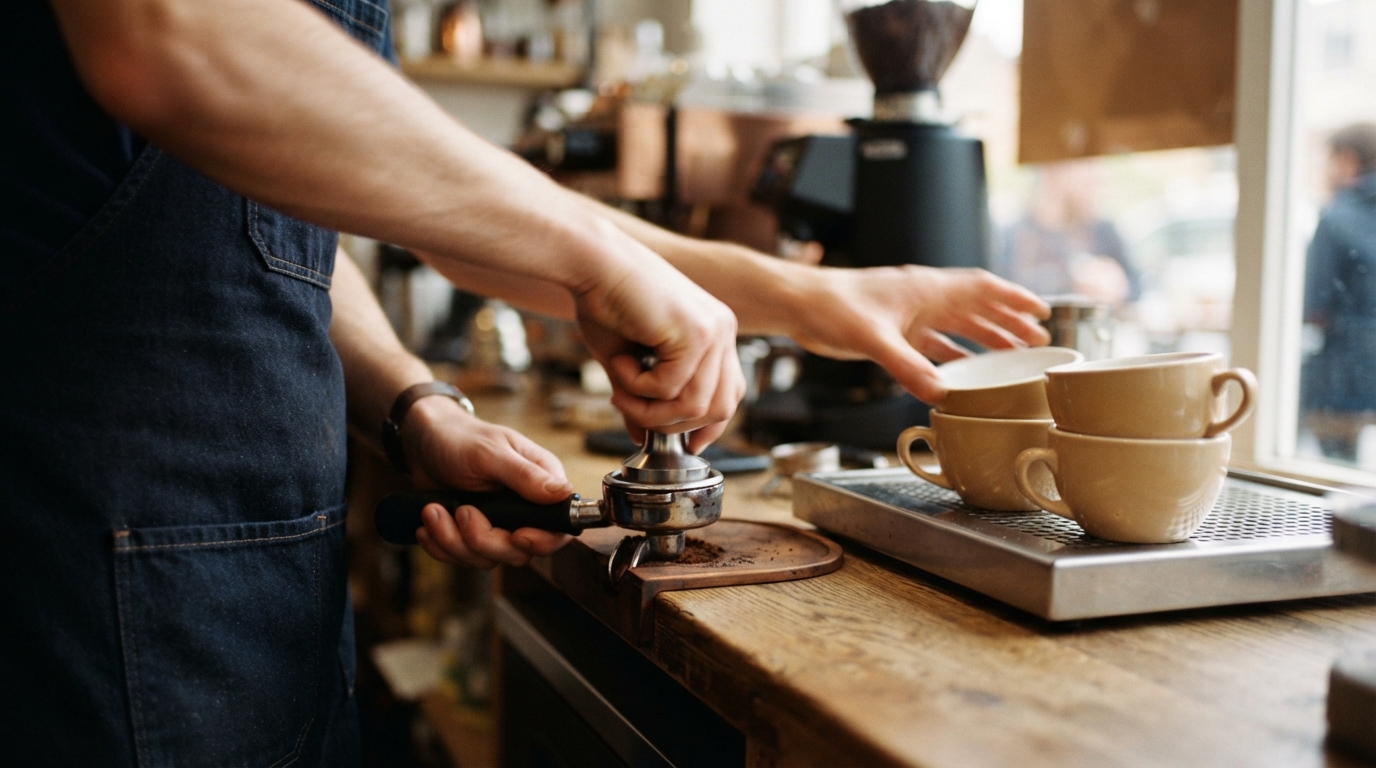
The routine includes grinding, extraction, assembly, restocking, cleaning, and waste control. If these steps are not designed before opening, service becomes inconsistent and the customer experience varies too much.
Location
The location needs to match traffic with consumption profile. In a coffee shop, foot traffic alone is not enough; what matters is whether people have a reason to stop, time to consume, and habits that fit your hours.
Financials
You need to project investment in equipment, working capital, ingredient waste, and monthly fixed costs with care. Coffee shops are usually quite sensitive to volume and ticket size, so the numbers need to show how each sale helps sustain the operation.
People
Service, brewing technique, and counter pace matter more than they seem. If the team does not master drink standards, service time, and customer approach, people notice quickly.
What can compromise the business
Choosing a location only because of traffic can lead to an address with passersby but no one stopping in. In a coffee shop, that hurts conversion and forces you to rely on more volume than the place can deliver.
Building an overly broad menu usually increases inventory, waste, and preparation time. The ideal is to validate which items support repeat sales without making the routine more complicated.
Underestimating the need for consistency in preparation creates an uneven experience. If the coffee changes too much from one drink to another, you lose repeat business and weaken customer trust.
Ignoring the real demand schedule makes the operation run empty for part of the day and overloaded at another time. You need to align opening hours, staffing, and supply with the behavior of the audience you want to serve.
Buying equipment before defining the model can lock capital into items that do not pay off in the chosen format. First comes the operating thesis, then the shopping list.
Turn these questions into decisions
Before opening a coffee shop, you need to turn impressions into decisions. What matters here is knowing who buys, why they buy, how service will work, and whether the numbers fit the format you want to operate.
Business Scope
It helps you organize the coffee shop thesis: audience, value proposition, service format, and critical bets. That makes it clear what needs to be validated before investing in a location, equipment, and team.
Market Intelligence
It helps structure your reading of the surrounding area, customer profile, and competitors already fighting for the same consumption routine. This is the right stage to compare demand windows, buying habits, and room for differentiation.
Operational Plan
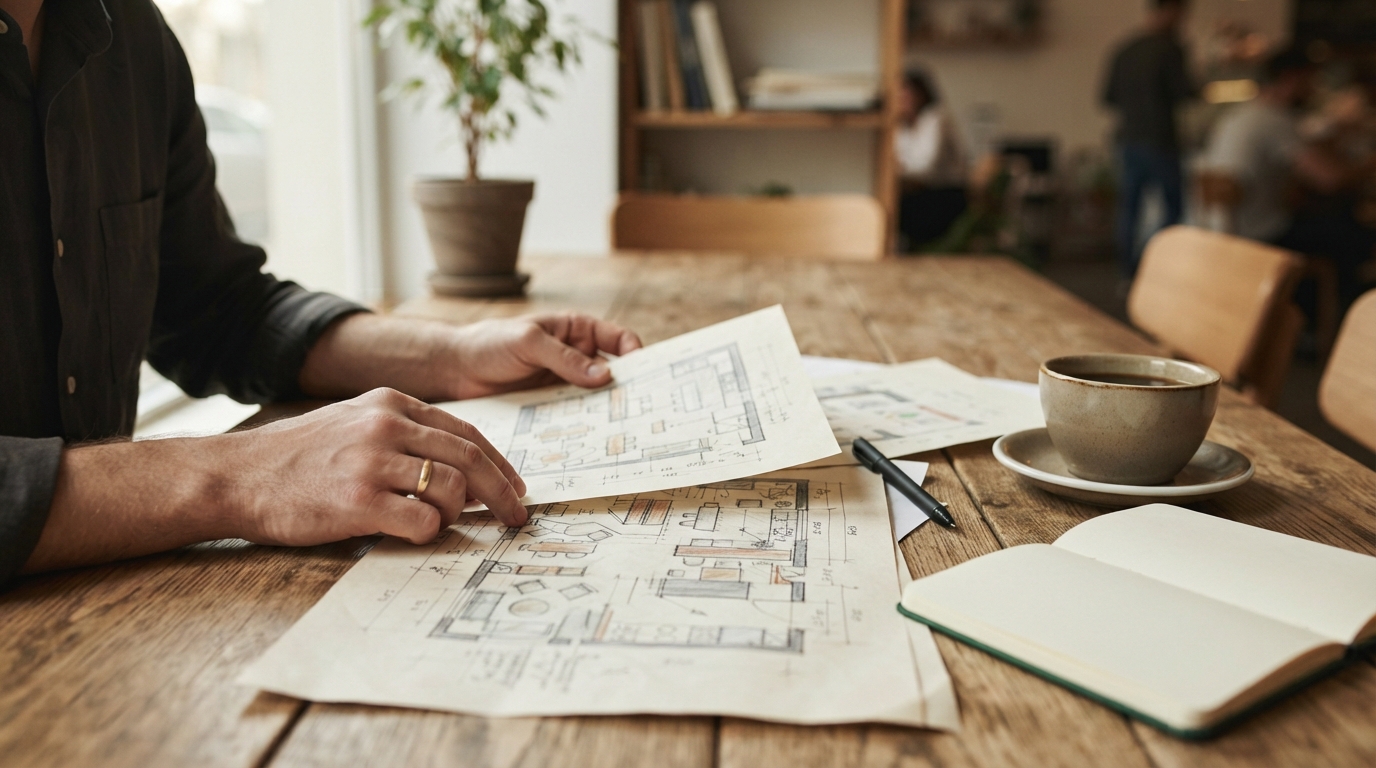
It shows how the coffee shop works in practice, from the product mix to the preparation flow, suppliers, structure, and sales channels. Here you can design the operation without improvising before the first purchase.
Financial Modeling
It turns decisions into projections for investment, costs, expenses, working capital, and cash flow. For a coffee shop, this is what shows whether the chosen format can stand on the volume you expect.
Before investing, you should know
- Which time of day concentrates the highest sales potential for the coffee shop you want to open?
- How many customers per day does the location need to attract to justify the operation?
- What average ticket can your menu really support?
- How many menu items depend on fresh preparation, and how much waste could that generate?
- Will you sell more through convenience, longer stays, or the product itself?
- What minimum team and equipment structure does the format require?
Sua ideia merece mais do que um palpite. Estruture o negócio, teste suas premissas e entenda se ele faz sentido antes de comprometer tempo e dinheiro.
Planejar meu negócio no Vibz