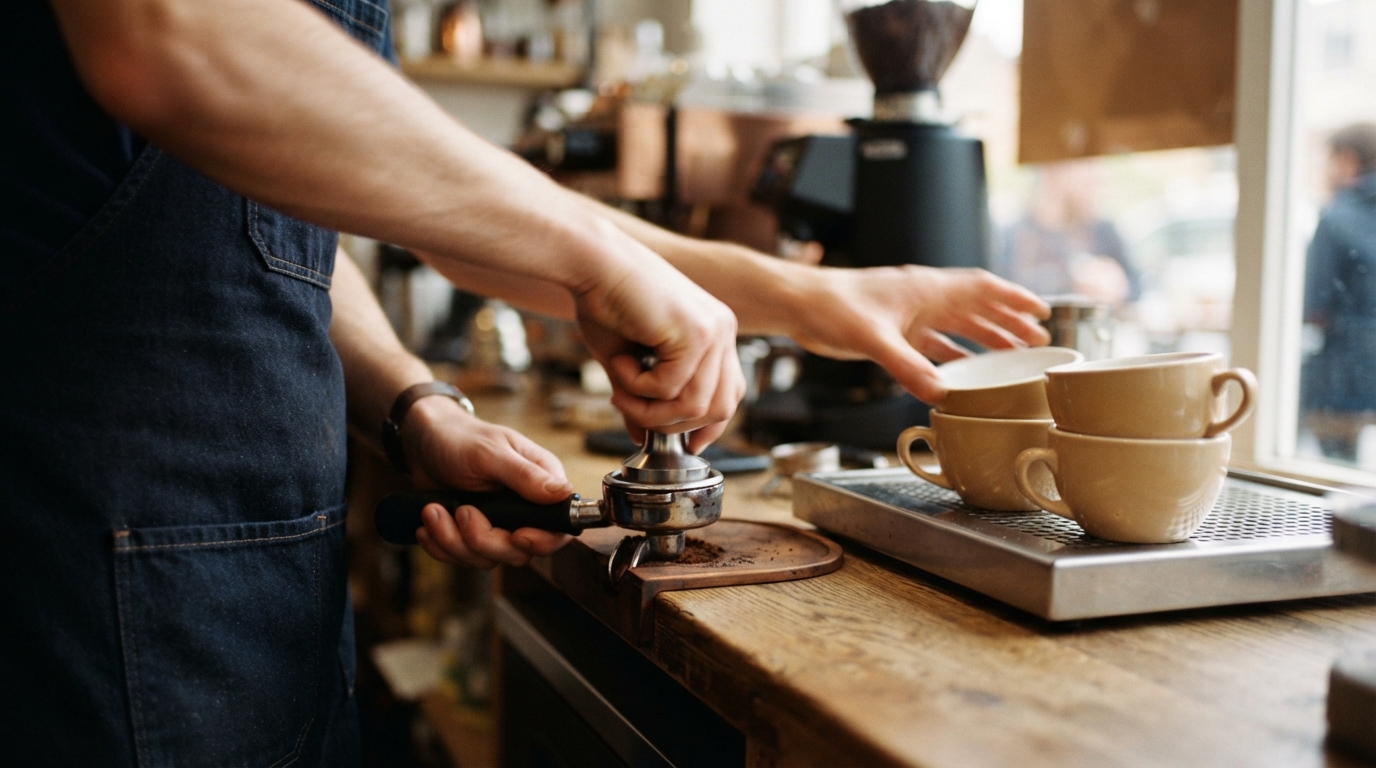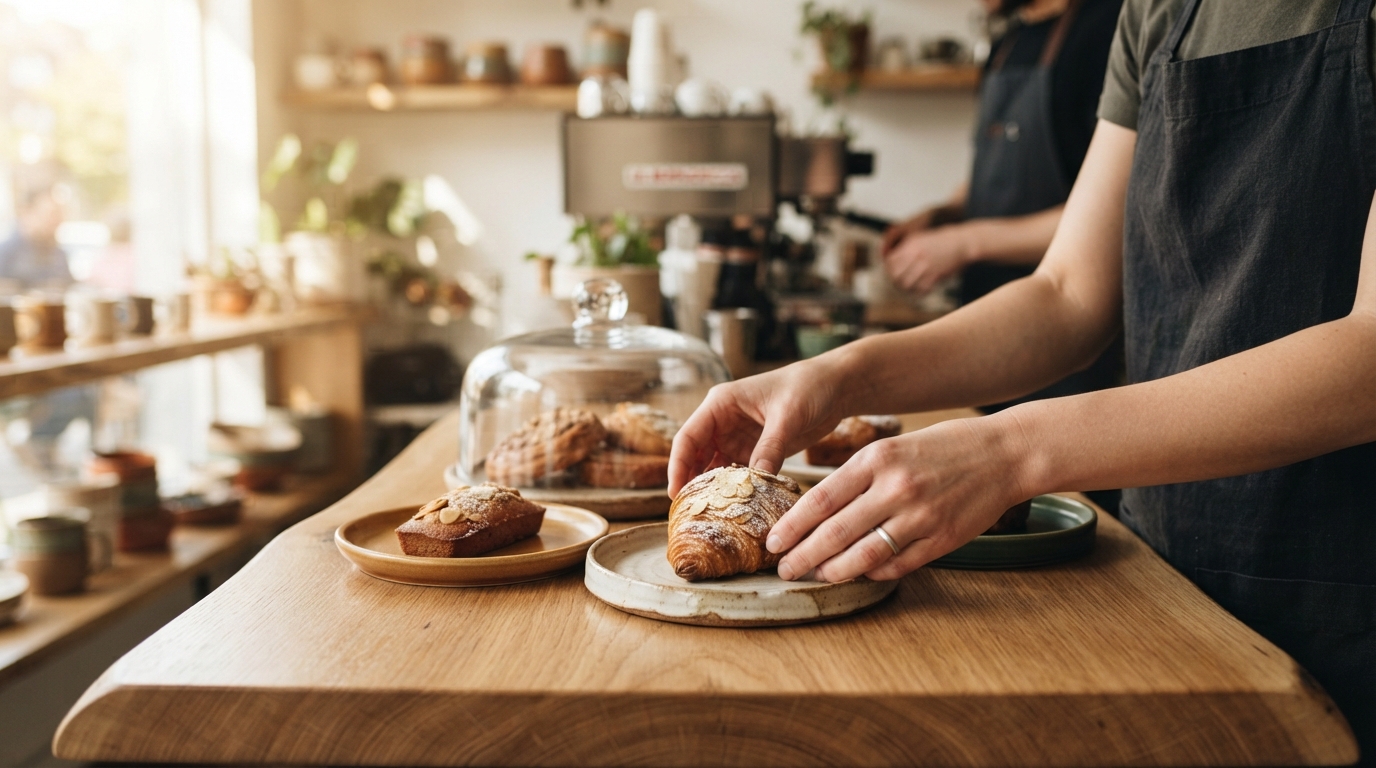
A specialty coffee shop depends on three things at once: well-executed drinks, a consistent experience, and enough ticket size to sustain the operation. That changes the math quite a bit compared with a generic café, because here customers notice the origin of the bean, the method, the preparation, and the quality of service more closely.
Before opening, you need to decide whether you will focus on single-origin coffees, filter methods, espresso, milk-based drinks, accompaniments, or a balanced mix. Each choice affects purchasing, inventory, training, service time, and margin.
- quick-prep beverage
- technical product
- on-premise consumption
- relevant average ticket
What you need to understand before moving forward
What is your coffee shop's proposition?
You need to define whether the business will center on specialty coffee, the consumption experience, convenience, or a mix of the three. That guides the menu, equipment, training, and even the kind of customer worth attracting.
Does your audience understand what they are buying?
Not every customer distinguishes origin, roast, brewing method, or sensory profile. You need to know whether you are selling to an already educated audience or whether you will have to explain the product's value at the counter, on the menu, and in your communication.
Does the service format fit the location?
A specialty coffee shop struggles when the preparation flow is slower than the place can handle. It is worth checking whether the space allows for an organized line, quick orders, and comfortable lingering without clogging the operation.
Which items will sustain repeat sales?
Coffee brings customers in, but it does not always pay the bills on its own. You need to decide which drinks, accompaniments, and frequently consumed items will make up the revenue, and which ones simply reinforce the concept.
Can you maintain preparation standards?
In this business, perceived quality depends on repetition. If each barista extracts differently, steams milk differently, or assembles drinks without a standard, customers notice the difference quickly.
The critical points of this business
Offer
The menu needs to be short enough to operate well and broad enough to cover different consumption moments. You should validate which drinks and accompaniments make sense for your audience and which ones only add complexity.
Operations
The business depends on routines for brewing, grinding, extraction, steaming, cleaning, and restocking. If these steps are not designed before opening, service slows down and standards drop.
Location
The location needs to match the kind of coffee you want to sell. A coffee shop built for lingering calls for a different street profile or surroundings than one focused on quick pickup or passing traffic.
Financials
You need to turn the menu into numbers. That includes equipment investment, inputs, waste, staff, rent, off-counter consumption, and the minimum sales volume required so the business does not depend on improvisation.
People
Quality here depends heavily on who prepares and serves. Training in extraction, service, and standardization matters more than in businesses where the product is mostly industrialized.
Channels
If there will be pickup, delivery, or pre-orders, that needs to be considered from the start. Not every specialty coffee shop works well outside the dining area, because some drinks lose quality quickly and require proper packaging.
What can compromise the business
Menu too technical for the local audience
If the surrounding market does not value differentiation, a very technical menu can confuse instead of sell. Before expanding the offer, watch what customers understand, ask for, and buy again.
Slow operation during peak hours
Many coffee shops lose sales when service takes longer than customers are willing to wait. You need to test the ordering, preparation, and delivery flow before opening for real.
Dependence on a few best-selling items
When almost all revenue comes from one or two products, any stock issue, seasonality, or shift in preference affects results. It is better to know in advance which items support the operation and which ones are just support.
Inconsistent standards across shifts
If the experience changes too much depending on who is behind the counter, the business loses trust. That usually happens when there is no recipe, no training, and no review routine.
A beautiful space, weak numbers
It is common to invest too much in the environment and underestimate equipment, initial inventory, and working capital. The space may attract people, but continuity depends on an operation that closes the numbers every month.
Turn these questions into decisions
In a specialty coffee shop, the plan needs to answer before opening whether you are building a consumption experience, a passing-through business, or a hybrid operation. Vibz organizes these decisions in stages so you can turn the idea into a thesis, validate the market, and reach the numbers with more clarity.
Business Scope
It helps you define the coffee shop's proposition, the audience that makes sense to serve, and which bets need to be true for the business to work.
Market Intelligence
It helps structure the analysis of the surroundings, buying behavior, and competition, without mixing perception with assumption.
Operational Plan
It organizes the design of the routine, menu, suppliers, team, and service channels before you buy or hire.
Financial Modeling
It turns those choices into investment, costs, working capital, and projections to test whether the model works before you commit capital.
Before investing, you should know
- How many orders per day does the location need to generate to cover rent, staff, and inputs?
- What share of revenue will come from coffee, and what share will come from accompaniments and other drinks?
- How long does each order take from purchase to delivery?
- Which equipment is mandatory for the standard you want to deliver?
- How many people do you need on each shift to keep service and preparation moving without delays?
- Does the surrounding area buy coffee for quick consumption, lingering, or the experience itself?
- Which menu items can lose quality if you offer delivery or pickup?
Sua ideia merece mais do que um palpite. Estruture o negócio, teste suas premissas e entenda se ele faz sentido antes de comprometer tempo e dinheiro.
Planejar meu negócio no Vibz