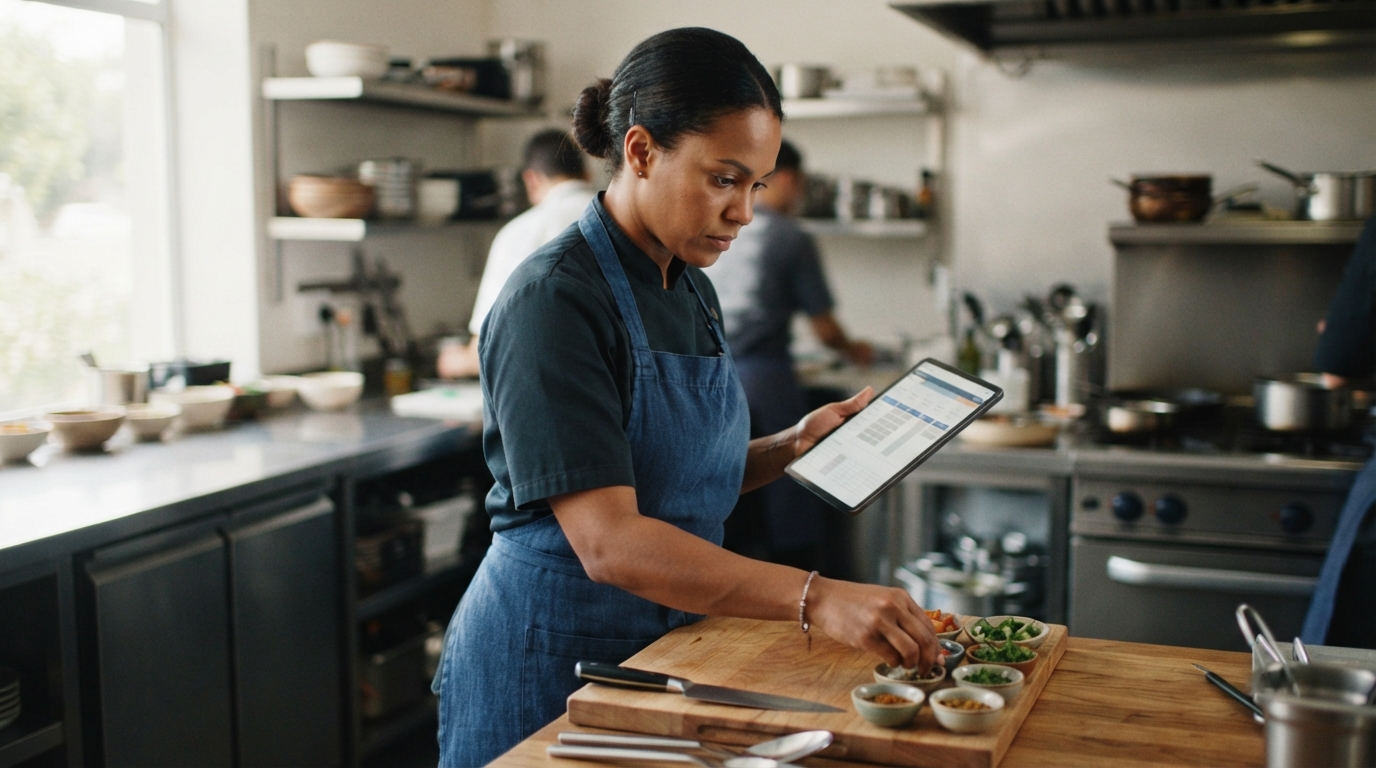
A traditional restaurant usually combines daily production, perishable inventory, in-person service, and a concentrated schedule. That changes how you plan purchases, staffing, the menu, and cash flow from the start.
The decision is not just about serving food. You need to understand whether the audience you want serves by habit, convenience, or occasion, because that changes the ticket size, frequency, and the kind of structure that makes sense.
- daily production
- perishable inventory
- in-person service
- concentrated hours
What you need to understand before moving forward
Who do you want to serve?
Define whether the restaurant will depend on weekday lunches, occasion-based dinners, local families, nearby workers, or destination customers. Each profile buys differently and supports a different mix of menu, hours, and location.
What is the menu concept?
Decide whether you will work with homestyle food, prix fixe plates, à la carte service, buffet, or a regional specialty. The menu needs to match the kitchen's capacity, the speed of service, and the margin you can protect.
Can the operation fit your team?
Map how many people are needed to cook, assemble, serve, clean, and restock ingredients during peak hours. In a restaurant, the problem is rarely just selling; it is delivering each order to the right standard without clogging the operation.
Does the location match the type of demand?
Check whether the address is close to the traffic that can support the restaurant or whether it depends on customers making a deliberate trip. A quick lunch business follows a different logic from an experience-driven restaurant, and that affects the frontage, access, visibility, and parking.
Which ingredients need tighter control?
List the items that spoil quickly, vary a lot, or make up the largest share of dish cost. That defines purchasing, storage, waste, and how often you need to review the menu.
The critical points of this business
Market
You need to understand who already eats out in the area, at what time, how often, and with what expectation for price, service, and atmosphere. Without that, the restaurant becomes too broad a bet for a business with thin margins.
Offer
The concept needs to be clear in the food, the service format, and the level of kitchen complexity. A long menu usually increases waste, slows production, and makes standardization harder, especially when the team is small.
Operations
A traditional restaurant depends on a well-designed routine: prep, mise en place, replenishment, order flow, cleaning, and closing. If the process is not clear before opening, service suffers exactly when demand starts to grow.
Financials
You need to separate initial investment, working capital, food cost, payroll, rent, utilities, maintenance, and losses. In this business, the most common mistake is opening with a structure that looks viable at launch but cannot hold up the following month.
Location
The address needs to fit the kind of customer you want to attract. A lunch restaurant depends on convenience and access; a dinner restaurant depends more on dwell time, atmosphere, and a clear reason to visit.
People
The kitchen and dining room need trained people who can repeat a standard, not just “help out.” High turnover or unclear roles undermine service consistency and increase waste and rework.
What can compromise the business
A menu larger than the kitchen can handle
When the menu tries to please too many tastes, purchasing becomes less efficient and production loses pace. Check whether each item has real demand, shared ingredients, and a repeatable process before keeping everything on the menu.
Choosing the location only for foot traffic
Traffic alone does not guarantee customers for a restaurant, because part of the audience only buys at specific times and with a clear reason. Assess whether the address fits the consumption routine, offers easy access, and matches the amount of time customers are willing to spend.
Underestimating losses and leftovers
In a restaurant, waste is not an operational detail; it is part of the result. If you do not control portions, shelf life, and turnover, costs rise without showing up immediately in the day’s sales.
Building a team without a service routine
Without defined roles, the dining room slows down, the kitchen gets disorganized, and the standard drops. Check whether each shift has a lead, a clear opening sequence, a closing routine, and a response to demand spikes.
Opening without testing the sales mix
Not every dish that looks good on paper sells at the same pace it occupies the kitchen. Before investing heavily, validate which items support ticket size, repeat purchases, and stable execution.
Turn these questions into decisions
Understanding the market and turning that into a plan is what separates a restaurant idea from a viable operation. With Vibz, you organize those decisions before committing capital, staff, and a lease.
Business Scope
It helps you turn the restaurant idea into a clear thesis: audience, concept, service model, and critical bets. That is useful for comparing formats such as executive lunch, à la carte service, or a specialty kitchen before choosing a path.
Market Intelligence
It helps structure your reading of the surroundings, customer profile, and competition you need to pay attention to. Here you organize the questions about demand, consumption habits, and restaurant positioning without mixing impressions with decisions.
Operational Plan
It helps you map how the kitchen, dining room, suppliers, shifts, and processes will work in practice. This is the right stage to test whether the menu, the team, and the pace of service fit the operation you want to open.
Financial Modeling
It turns the restaurant choices into investment, costs, expenses, working capital, and projected cash flow. This is where you check whether the format you have in mind can handle the structure the service itself requires before you buy or hire.
Before investing, you should know
- How many customers per day does your format need to serve to support the structure you want to build?
- What share of revenue will come from lunch, dinner, or specific occasions?
- How many menu items depend on perishable ingredients, and what turnover do you expect for each one?
- What will be the acceptable average time between ordering and delivery for your type of service?
- How many people do you need per shift to open, operate, and close without improvisation?
- What level of initial investment is needed for the kitchen, dining room, inventory, and working capital?
- What will you do if the location has traffic but not the right customer profile?
Sua ideia merece mais do que um palpite. Estruture o negócio, teste suas premissas e entenda se ele faz sentido antes de comprometer tempo e dinheiro.
Planejar meu negócio no Vibz