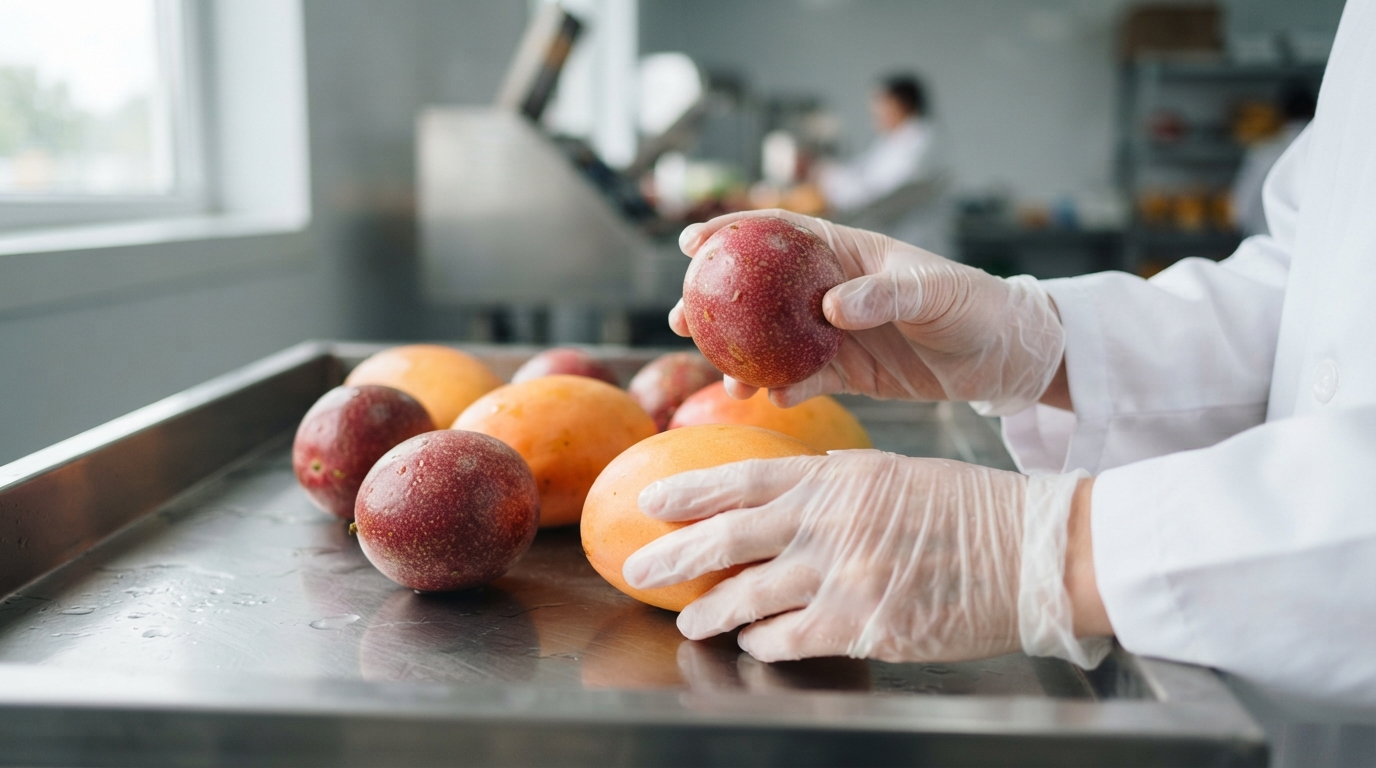
A fruit pulp processing business does not start with the processing machine. It starts with choosing the fruit, with the way you receive it, wash it, pulp it, freeze it, and store it without losing consistency from batch to batch.
This kind of business requires control over perishability, a disciplined production routine, short shelf life, and sanitary rigor. If you get purchase predictability or cold storage capacity wrong, the losses show up fast.
- perishable raw material
- continuous cold chain
- seasonal production
- sanitary control
What you need to understand before moving forward
Which fruits will have regular supply?
You need to map which fruits you can buy consistently throughout the year and which depend on harvest cycles. That defines your pulp mix, production stability, and the risk of having idle equipment for part of the calendar.
Will you buy directly from producers or through intermediaries?
The buying model changes price, predictability, and the quality control of the fruit you receive. If you do not know where the raw material comes from, it becomes harder to standardize flavor, yield, and processing losses.
What quality standard will you accept at intake?
You need to decide what gets in and what gets rejected, with clear criteria for ripeness, integrity, and sanitary condition. In pulp production, accepting fruit below standard usually turns into lower yield and unstable final product.
What will the mix be between easier pulps and more sensitive ones?
Not every fruit demands the same level of care, yield, or equipment. The mix needs to balance margin, availability, and operational complexity, because a poorly designed portfolio increases waste and slows production.
Where will the cold chain begin and end?
You need to define how the fruit arrives, where it stays before processing, how the pulp is frozen, and how it leaves inventory. Any break in that chain affects shelf life, texture, and product safety.
The critical points of this business
Market
Before producing, you need to understand who buys pulp within your operating area, in what format they buy it, and how often they reorder. Food service, local retail, and resellers have different requirements for packaging, volume, and consistency.
Supply
Supply is not just about choosing fruits. You need to decide whether you will work with single-fruit pulps, blends, seasonal lines, or a few well-controlled references, because each choice changes inventory, production, and turnover.
Operations
The process needs to be designed end to end: receiving, sorting, washing, pulping, filling, freezing, storage, and shipping. In a pulp processing business, any poorly organized stage increases losses and undermines standardization.
Financials
The business depends on buying well, losing little, and turning inventory quickly. You need to calculate cost per kilogram processed, yield per fruit, working capital needs, and the impact of seasonality on cash flow.
Regulation
This business requires sanitary and documentation compliance from the start. You need to check licensing, inspection, labeling, good manufacturing practices, and facility conditions before investing in equipment.
People
The operation depends on trained people to sort fruit, run equipment, maintain hygiene, and follow routine. If the team improvises during sorting or filling, standards drop and the risk of loss rises.
What can compromise the business
Buying fruit without quality criteria. That increases waste, lowers yield, and weakens pulp consistency. To avoid it, define acceptance standards by fruit before signing with suppliers.
Building a production line larger than the local supply can support. The machine may exist, but without regular volume the operation becomes expensive for what it delivers. Before investing, confirm where the raw material will come from in each period of the year.
Ignoring freezing and storage capacity. In pulp production, making product without enough cold storage creates buildup, losses, and standard drift. Check the real capacity to store what you plan to produce, not just what you can process.
Starting with too many products. Each fruit adds purchasing needs, sorting, yield adjustments, and inventory control. If the mix grows before the operation stabilizes, management becomes harder than sales can justify.
Leaving compliance for after installation. The structure and process need to be built in line with sanitary and labeling requirements from day one. Fixing that later usually costs more and delays the start of operations.
Turn these questions into decisions
In this activity, the difference between a good idea and a viable business is turning available fruit, cold storage capacity, quality standards, and sales channels into a coherent plan. Vibz organizes these decisions so you can see what needs to be validated before buying equipment or locking in a facility.
Business Scope
Use this step to turn the idea into a clear business thesis: which fruits you will work with, who you will sell to, which problem you solve, and which assumptions need to be validated before investing.
Market Intelligence
Here you structure the analysis of who buys pulp, how that customer decides, which channels make sense, and how the local environment affects your entry. It is the right stage to connect demand, competition, and buying behavior.
Operational Plan
This step helps you design the real operating flow of the processing business: receiving, sorting, processing, freezing, inventory, team, and channels. It is where you organize operations before hiring or buying.
Financial Modeling
Here you turn decisions about mix, capacity, losses, inventory, and seasonality into numbers. It is the stage to test investment, costs, working capital, and cash flow before committing capital.
Before investing, you should know
- Which fruits can you buy regularly in each month of the year?
- What minimum weekly volume of processed fruit keeps the operation aligned with the structure you plan to build?
- What average pulp yield does each fruit deliver after sorting and processing?
- What freezing and storage capacity do you need so you do not produce more than you can hold?
- Which sanitary, licensing, and labeling requirements must your facility meet before you start?
- Which channels will absorb your production at the frequency this business requires?
Sua ideia merece mais do que um palpite. Estruture o negócio, teste suas premissas e entenda se ele faz sentido antes de comprometer tempo e dinheiro.
Planejar meu negócio no Vibz