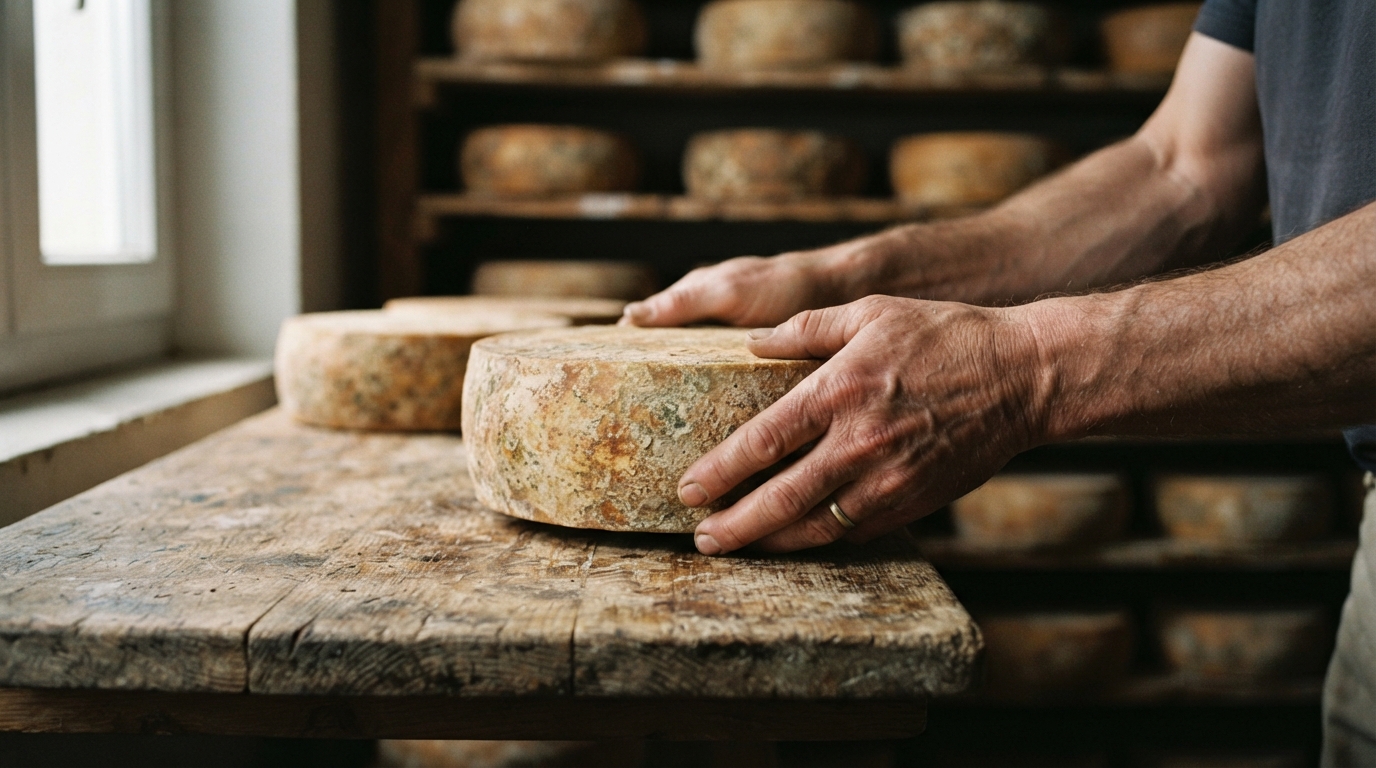
An artisan cheese dairy is a business where product quality depends on the raw material, the process, and time. If you get the milk source wrong, the production room setup wrong, or the aging plan wrong, the problem shows up in the whole batch, not just one unit.
This kind of business also requires commercial decisions from the start. Artisan cheese usually sells more slowly than everyday turnover products, and that changes how you calculate production, inventory, sales channels, and working capital.
- controlled raw material
- inventory aging
- sanitary production
- sales through selected channels
What you need to understand before moving forward
Where will the milk come from?
You need to decide whether you will buy milk from nearby producers, from a single source, or from more than one farm, and check whether that source can keep a consistent standard לאורך the year. In artisan cheese, milk variation changes yield, texture, and flavor, so raw material stability matters as much as price.
Which cheeses make sense at the beginning?
Not every artisan cheese fits the same setup. You need to choose between short-, medium-, or long-aging products, because that changes space, cash turnover, losses, and how often product leaves the facility.
How will the product leave the plant?
Define whether sales will go to specialty shops, restaurants, farmers' markets, direct-to-consumer sales, or a combination of channels. Each channel calls for different packaging, consistency, volume, and margin, and that changes the operation from the first batch.
Does the structure meet sanitary requirements?
Before investing, check what will be needed to produce legally in your case, considering clean areas, flow separation, water, refrigeration, and hygiene control. In a dairy, sanitary compliance is not a construction detail; it determines whether the business can operate and grow.
How long does the money stay tied up in inventory?
Aged cheeses tie up capital longer than products sold immediately. You need to know how much you will produce, how much will age, and how long the cash flow can support that cycle without relying on very fast sales.
The critical points of this business
Market
You need to understand who buys artisan cheese in your region and what that person values most: origin, flavor, consistency, aging, packaging, or sanitary trust. Without that, you may produce a good cheese and still sell little, because the market buys on criteria that are not only about taste.
Offer
The initial mix has to fit your structure. Fresh, semi-aged, and aged cheeses require different production and sales rhythms, so the offer should start with a few well-defined products instead of a long list that makes control harder.
Operations
The operation needs to separate milk receiving, pasteurization when applicable, coagulation, molding, salting, aging, and shipping. If these flows are not clear, the risk of cross-contamination, batch loss, and rework goes up.
Regulation
You need to map the sanitary registration and the proper license to produce and sell in the territory where you plan to operate. In a dairy, the difference between selling only locally and expanding reach depends on getting the formal setup right from the beginning.
Financial
The financial plan needs to account for investment in facilities, cold equipment, inputs, packaging, process losses, and working capital for aging. The breakeven point here depends not only on selling well, but on surviving the time between production and payment.
Channels
The sales channel needs to match the type of cheese and the production frequency. If you depend on channels that require fast, constant deliveries, but you work with long aging, the operating math is off from the start.
What can compromise the business
Choosing the portfolio before the structure
Starting with too many cheese types usually requires equipment, routines, and timelines that are too different for a new operation. The result is inconsistent standards, control difficulties, and poorly distributed inventory. The safer path is to choose a few products compatible with the same production base.
Ignoring sanitary compliance
In an artisan dairy, selling before understanding the inspection service requirements and the applicable regulations can block the business after you have already invested. Check the correct classification, documentation, and production requirements before buying equipment.
Underestimating aging
Aged cheese does not turn over like a fresh product. If you do not calculate curing time, the space required, and the capital tied up during that period, you may produce more than you can sustain. That affects cash flow and the quality of the batch.
Depending on milk without a standard
When the milk source varies too much, the cheese varies too. That compromises yield, texture, and repeatability, which is bad for consistent sales. Before investing, validate suppliers and minimum receiving criteria.
Selling without a defined channel
Producing first and looking for buyers later usually leads to stagnant inventory, forced discounts, or quality loss. In artisan cheese, the channel has to be considered together with the offer, because each sales format calls for different volume, packaging, and frequency.
Turn these questions into decisions
Understanding the market and organizing the plan before buying equipment avoids decisions that are too expensive for an artisan dairy. At Vibz, you structure these answers in stages, so you can move from the idea to a clear thesis and a plan that makes practical sense.
Business Scope
It helps you define the dairy model, the type of cheese, the audience, and the critical bets before investing in the structure.
Market Intelligence
It serves to organize the analysis of who buys artisan cheese, which channels make sense, and which market signals you need to watch in your region.
Operational Plan
It shows how to design production, milk flow, aging, suppliers, and channels before the first equipment purchase.
Financial Modeling
It turns these decisions into investment, costs, working capital, and cash flow so you can test viability before committing capital.
Before investing, you should know
- How many liters of milk per week can you contract with a stable supply pattern?
- Which cheeses can you produce with the same setup without creating bottlenecks in aging or refrigeration?
- How much aging and refrigeration space does your initial product mix require?
- Which license or sanitary classification do you need to sell in the channel you chose?
- How long does the cash flow need to support the time between producing, aging, and getting paid for sales?
- Which channel will absorb the initial volume first without requiring a broader mix than your operation can handle?
- Which process losses do you need to factor into the cheese's real yield?
Sua ideia merece mais do que um palpite. Estruture o negócio, teste suas premissas e entenda se ele faz sentido antes de comprometer tempo e dinheiro.
Planejar meu negócio no Vibz